
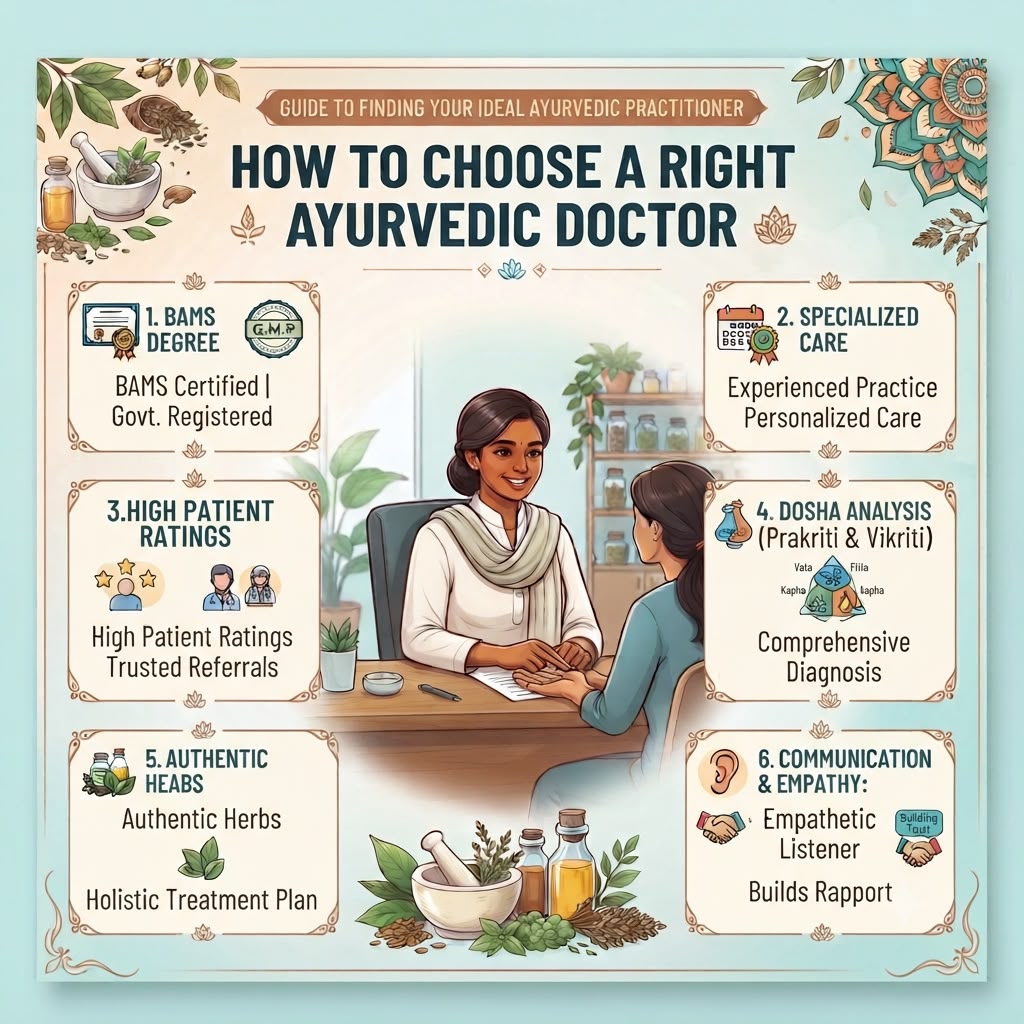
In an era where more people are turning to holistic wellness, finding authentic, individual-centered care has never been more important. However, typing “best Ayurvedic doctor near me” into a search engine often yields hundreds of overwhelming choices—from traditional neighborhood clinics to luxury wellness retreats.
How do you filter through the noise to find a licensed practitioner who truly understands your unique body constitution (Prakriti)? Here is a complete guide to choosing the right Ayurvedic doctor for your health journey.
📌 Quick Takeaways
- Check Degrees: Always look for a BAMS (Bachelor of Ayurvedic Medicine and Surgery) degree or recognized board certification.
- Evaluate Diagnostics: Authentic practitioners prioritize holistic diagnostic methods like Nadi Pariksha (pulse diagnosis) over quick prescriptions.
- Beware Quick Fixes: Real Ayurveda focuses on root-cause healing using diet (Ahara), lifestyle (Vihara), and herbal remedies (Aushadhi).
The foundation of safe, effective Ayurvedic care starts with verified medical education. Ayurveda is an intricate medical science, and proper qualification ensures your practitioner can safely integrate holistic care with modern health considerations.
When researching a doctor, look for these specific credentials:
Ayurveda provides targeted protocols for chronic conditions, digestive disorders, joint pain, skin diseases, metabolic health, and stress management.
If you require advanced detoxification or deep rejuvenation, search specifically for an accredited Panchakarma center.
| What to Look For | Why It Matters |
| Personalized Dosha Assessment | A reputable doctor will clearly explain how a treatment balances your specific dosha (Vata, Pitta, or Kapha) rather than pushing one-size-fits-all packages. |
| Hygiene & Clinical Standards | Ensure the clinic maintains clean, hygienic therapy rooms for procedures like Shirodhara, Abhyanga, or Basti. |
| Transparent Protocols | A good doctor will walk you through each step of the therapy before beginning treatment. |
When exploring a local Ayurvedic clinic, look beyond overall star ratings and read detailed patient feedback.
💡 Pro Tip on Ratings: Perfection is rare in healthcare. A practice with a 4.8 or 4.9 rating and thoughtful, detailed patient reviews is often more authentic than a clinic with hundreds of generic 5.0-star reviews.
A genuine Ayurvedic doctor takes time to understand the root cause of an illness rather than treating symptoms in isolation. During an initial session—whether in-person or via an Ayurvedic consultation online—a qualified practitioner will:
When choosing a practitioner, be cautious if you notice any of these warning signs:
A qualified Ayurvedic physician should hold a BAMS (Bachelor of Ayurvedic Medicine and Surgery) degree from an accredited institution, which requires over 5 years of training in both traditional Ayurveda and modern medical fundamentals.
Yes! Many certified Ayurvedic doctors offer tele-consultations. While physical assessments like Nadi Pariksha require an in-person visit, an experienced practitioner can effectively evaluate your Prakriti and health history through a thorough virtual assessment.
Because Ayurveda focuses on treating the underlying root cause of health issues rather than suppressing symptoms, noticeble improvements generally take anywhere from a few weeks to a few months, depending on the chronicity of the condition.
Finding the right Ayurvedic doctor comes down to balancing formal medical credentials with personalized, root-cause care. By verifying qualifications, reading authentic patient reviews, and prioritizing doctors who take a holistic approach, you can confidently take control of your long-term health and well-being.
Copyright @jyotiayurclinic.com.